visitor@linuxweenie:~$ ./open_museum.sh
MUSEUM OF LINUX
The rowdy younger-sibling wing of the Weenie Museums campus.
Memes welcome. sudo required. Beards optional (the Unix Wing across the hall has enough for everyone).
// welcome, fellow weenie
This is the Linux Wing — the loud, meme-literate, perpetually-reinstalling branch of the Weenie Museums campus. Our sibling wing, the Museum of Unix, is full of distinguished greybeards who remember when "the cloud" just meant "someone else's mainframe." We love them dearly. We simply boot faster.
Everything here is true-ish, everything is affectionate, and everything runs on hardware somebody rescued from a dumpster in 2011. Please do not lick the exhibits. The penguin is a mascot, not a snack.
1991: It Began With a Post
Helsinki, August 1991. Before the kernel, before the distros, before a single flame war,
there was a humble message posted to the comp.os.minix newsgroup by a
21-year-old computer science student named Linus Torvalds, announcing a little project
he was tinkering with in his spare time.
"I'm doing a (free) operating system (just a hobby, won't be big and professional like gnu) for 386(486) AT clones."
Historians of technology generally agree this ranks among the great understatements of the millennium. The hobby went on to power most of the world's servers, supercomputers, phones, routers, and at least one toaster we have chosen not to verify.
Tux the Penguin
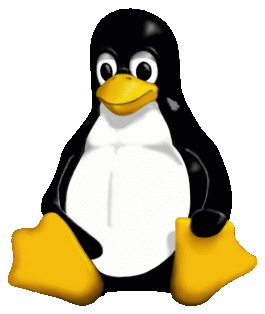
Adopted in 1996, Tux is the roundest, smuggest brand ambassador in computing. Legend holds that Linus was once nibbled by a penguin at a zoo and found the experience charming enough to crown the species. The museum takes no position on the nibbling. The penguin remains unbothered.
Tux has since appeared on desktops, server racks, conference badges, and an unreasonable number of plush toys. A plush concept awaits on our gift-shop shelf.
The Kernel: One Commit at a Time Since 1991
At the heart of every Linux system sits the kernel — the monolithic core that talks to your hardware so your apps don't have to. It is one of the largest collaborative software projects in human history, built in the open by thousands of contributors, released on a brisk cadence, and held together by mailing-list threads of legendary politeness*
* politeness not guaranteed. See: The Great Flame Wars.
Fun fact for the placard: the kernel's versioning once jumped from 2.6 straight to 3.0 partly because the numbers were getting silly. We respect that energy. This museum's exhibit numbering will never exceed 2.6.
The Year of the Linux Desktop
Since approximately 1998, enthusiasts have predicted that next year will finally be the Year of the Linux Desktop — the year Linux conquers the mainstream consumer PC.
It has been next year for over a quarter of a century. The museum's official position is that the joke is the desktop, and the desktop is eternal.
$ ./predict_desktop_year.sh
> Our oracles currently predict next year. They have never been wrong about being wrong.
Package Managers: The Original App Store
Long before phones had app stores, Linux had apt, pacman,
dnf, zypper, and emerge — one incantation, tens of
thousands of programs, zero toolbars, zero "would you like to install our partner's
weather widget."
Nothing says "I have ascended" like typing one line and watching forty packages resolve their dependencies in perfect harmony. Nothing says "I have descended" like a dependency conflict at 2 a.m. Both are on display. Both are beautiful.
Please whisper near the emerge display. It is still compiling.
// continue the tour
> Enter the Distro Hall of Fame and Hall of Shame
> Witness the Great Flame Wars (safely behind glass)
> Browse the concept gift-shop shelf
> Visit our distinguished elders at the Unix Wing (bring your own beard)